Riace Bronzes
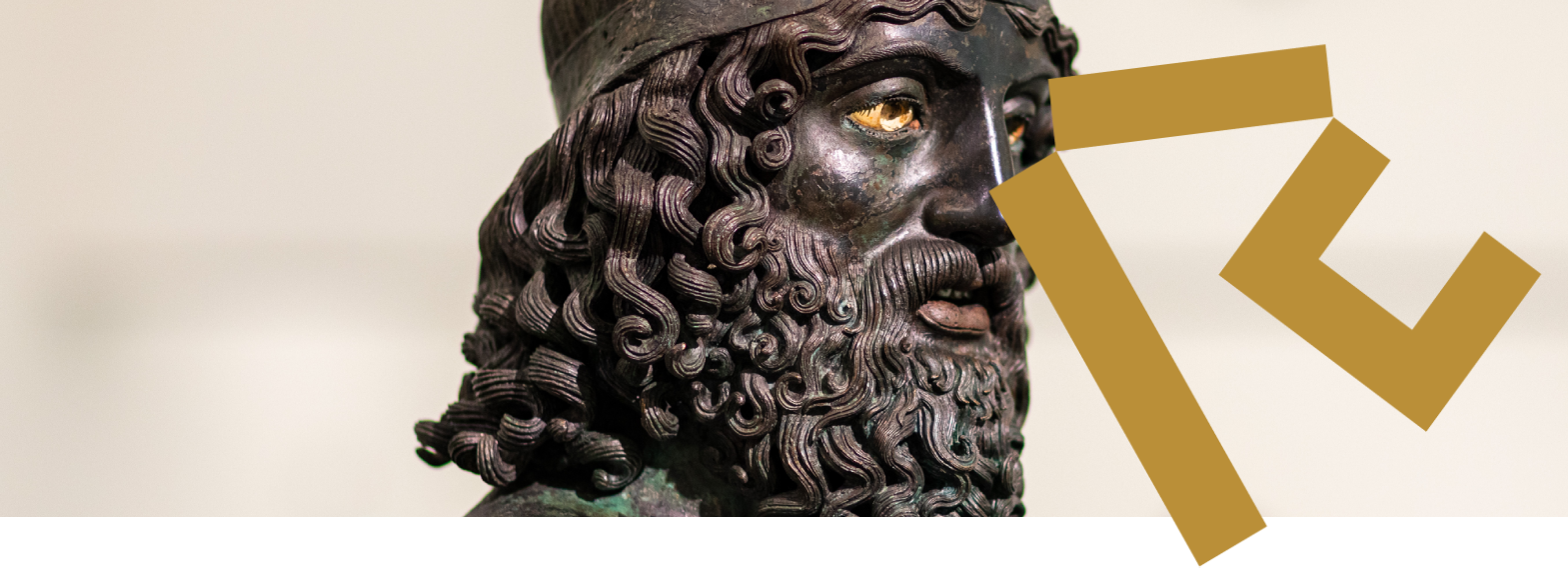
Absolute masterpieces of 5th-century BC Greek sculpture, the Riace Bronzes are the symbol of the National Archaeological Museum of Reggio Calabria.
Discovered in 1972 off the coast of Riace Marina, they depict two bronze warriors of extraordinary beauty and expressive power, crafted using the lost-wax casting technique. Today, they are preserved in a museum setting designed to ensure their protection, accessibility, and appreciation.
Two unique masterpieces
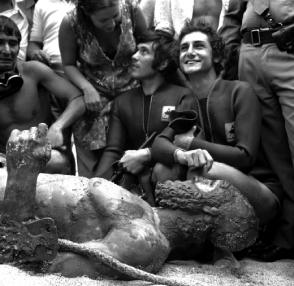
Recovered in 1972 by Stefano Mariottini, the Riace Bronzes underwent delicate restoration work, first in Reggio Calabria and then in Florence.
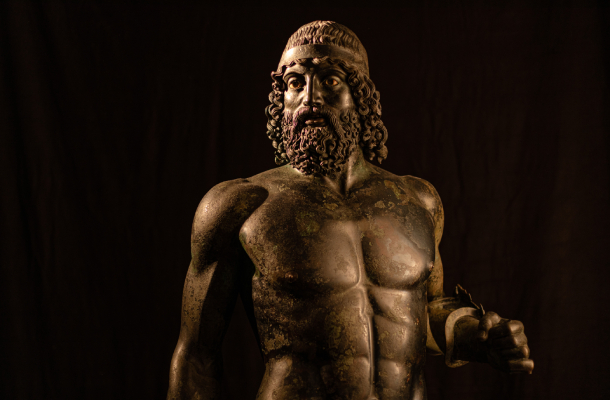
The statues, nearly two meters tall, portray two nude and powerful figures, originally equipped with weapons and accessories that are now lost. Their eyes are made of calcite and glass paste, while the lips and anatomical details in copper and silver lend them extraordinary realism.
Their bodies, sculpted with remarkable skill, convey strength, balance, and solemnity. It remains uncertain whether they represent athletes, mythological heroes, or deities. Studies of the casting cores suggest a Greek origin, likely from Attica and Argolis.
The discovery
In August 1972, the statues were found in Riace Marina, 8 meters underwater.
Restoration and identity
After an initial recovery in Reggio Calabria, they were restored in Florence and later again at the Museum.
Their attribution remains uncertain: they could represent athletes, deities, or mythical figures from Classical Greece.
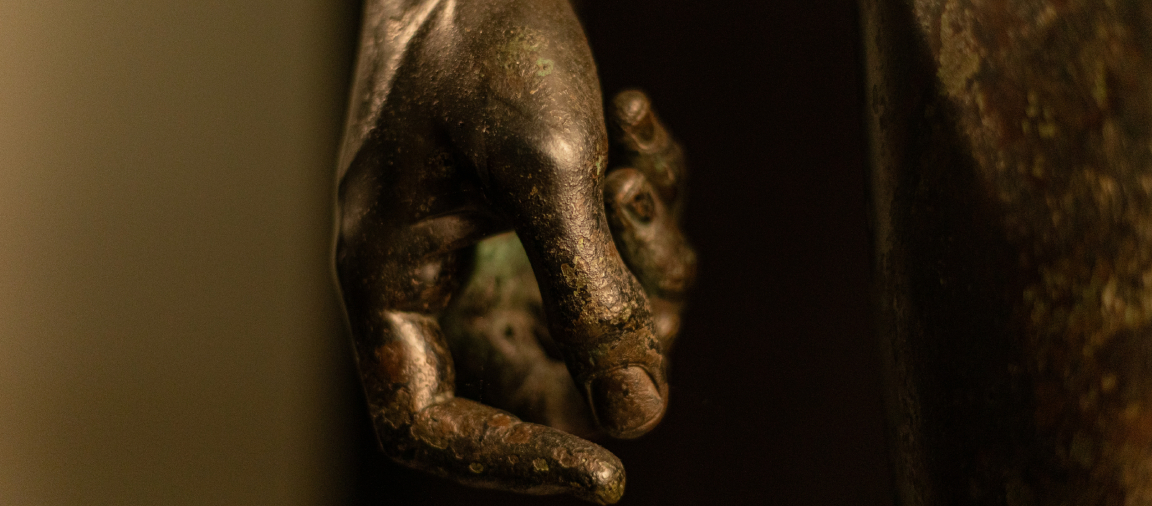
Made using the lost-wax casting technique, the Bronzes are incredibly rich in anatomical and decorative detail. Musculature, hair, veins, and arteries are sculpted with meticulous precision.
Bronze A wears a tenia (a victory ribbon) and has a finely detailed beard, while Bronze B is bald to accommodate a raised helmet. The proportions and balance of the figures reflect the supreme mastery of ancient Greek sculptors.
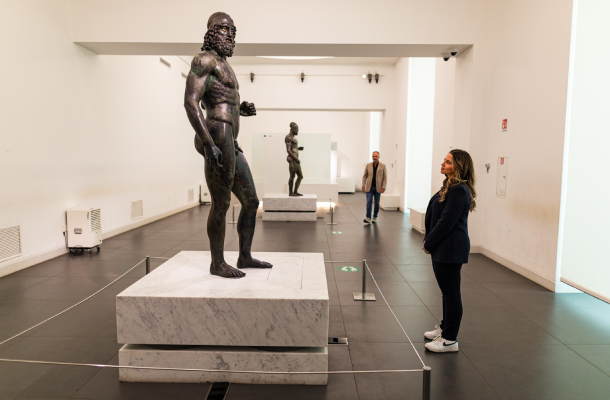
Visiting the Bronzes room
Access to the Bronzes of Riace and Porticello Room is regulated for conservation reasons. Entry is limited and preceded by a stop in special transition areas. Visitors are kindly asked to follow the instructions of the museum staff.
If visitors have disabilities or specific needs, it is recommended to notify the ticket office in advance to help ensure a safe and accessible experience for everyone.