A Museum for Everyone
The National Archaeological Museum of Reggio Calabria is committed to making its archaeological heritage accessible to a diverse range of audiences through solutions that promote independence, orientation and a better understanding of the museum’s content.
Thanks to the initiatives carried out as part of Italy’s National Recovery and Resilience Plan (PNRR) to improve accessibility, the museum experience has also been enhanced with tactile tools, orientation systems, audiovisual and multimedia content, resting areas and dedicated spaces designed to ensure visitors’ comfort and well-being.
Orientation and Accessibility Systems
The entrance is equipped with an external access ramp, and the museum has internal lifts providing access to the different exhibition levels, facilitating mobility for visitors with physical disabilities.
Wayfinding Systems
The wayfinding system has been redesigned and enhanced to make it easier for visitors to identify the museum’s spaces, destinations and different points along the visitor route.
Information Panels with QR Codes
The new information panels improve the readability of the content and, through QR codes, provide access to additional information and further insights.
LOGES Tactile Guidance Paths with LVE Technology
LOGES guidance paths equipped with LVE technology have been installed throughout the museum to facilitate orientation and movement, with particular attention to the needs of visitors with visual impairments.
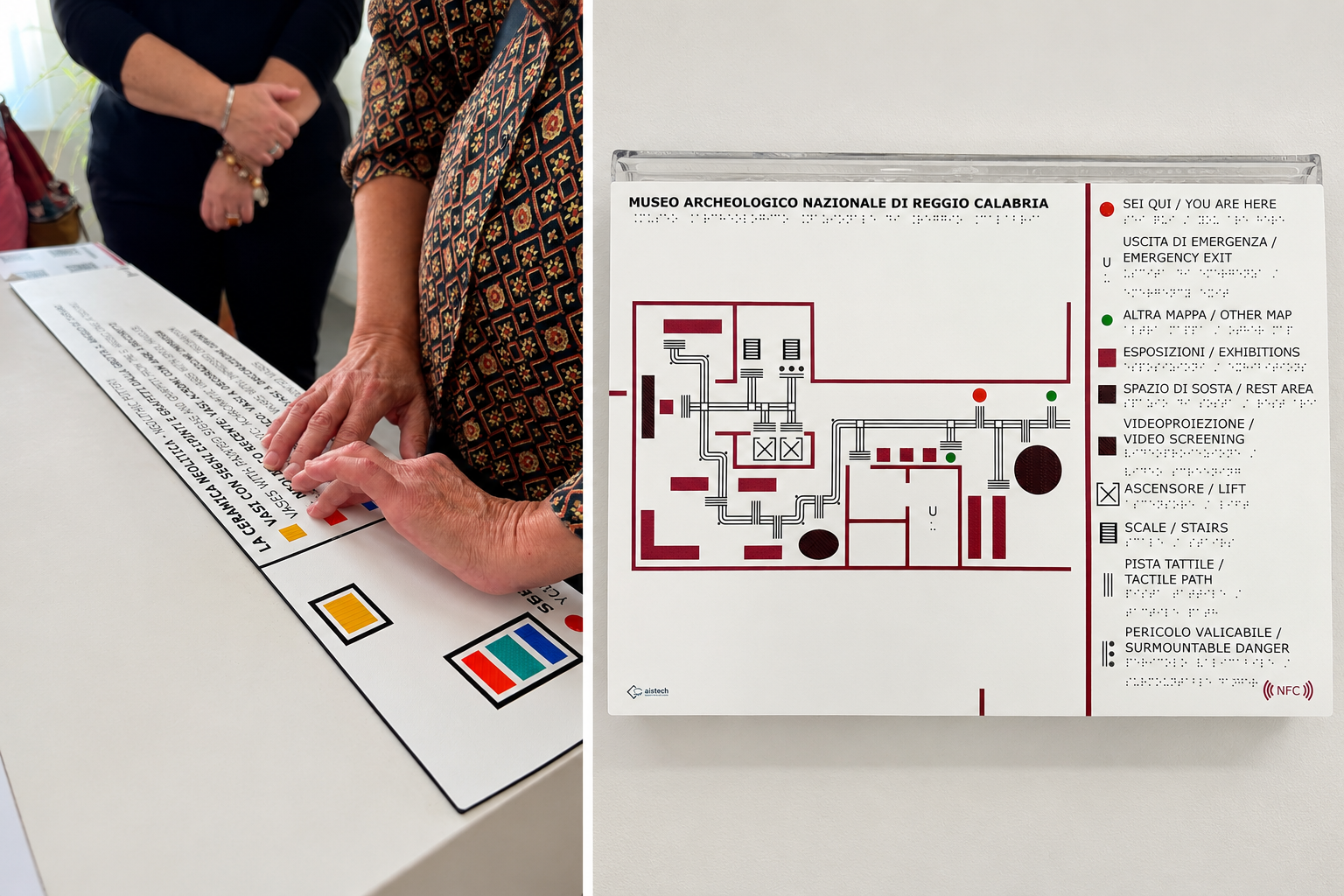
Tactile Maps
Located on each floor, the tactile maps allow visitors to explore the layout of the spaces and the organisation of the museum route through touch.
Tactile Signs for Facilities and Exhibition Areas
The tactile signs help visitors locate the museum’s main facilities and identify the exhibition areas, providing additional ways to access information.
Italian Sign Language (LIS) Video Guide
An Italian Sign Language (LIS) video guide, designed to accompany visitors through the collections, is also available at the ticket office.
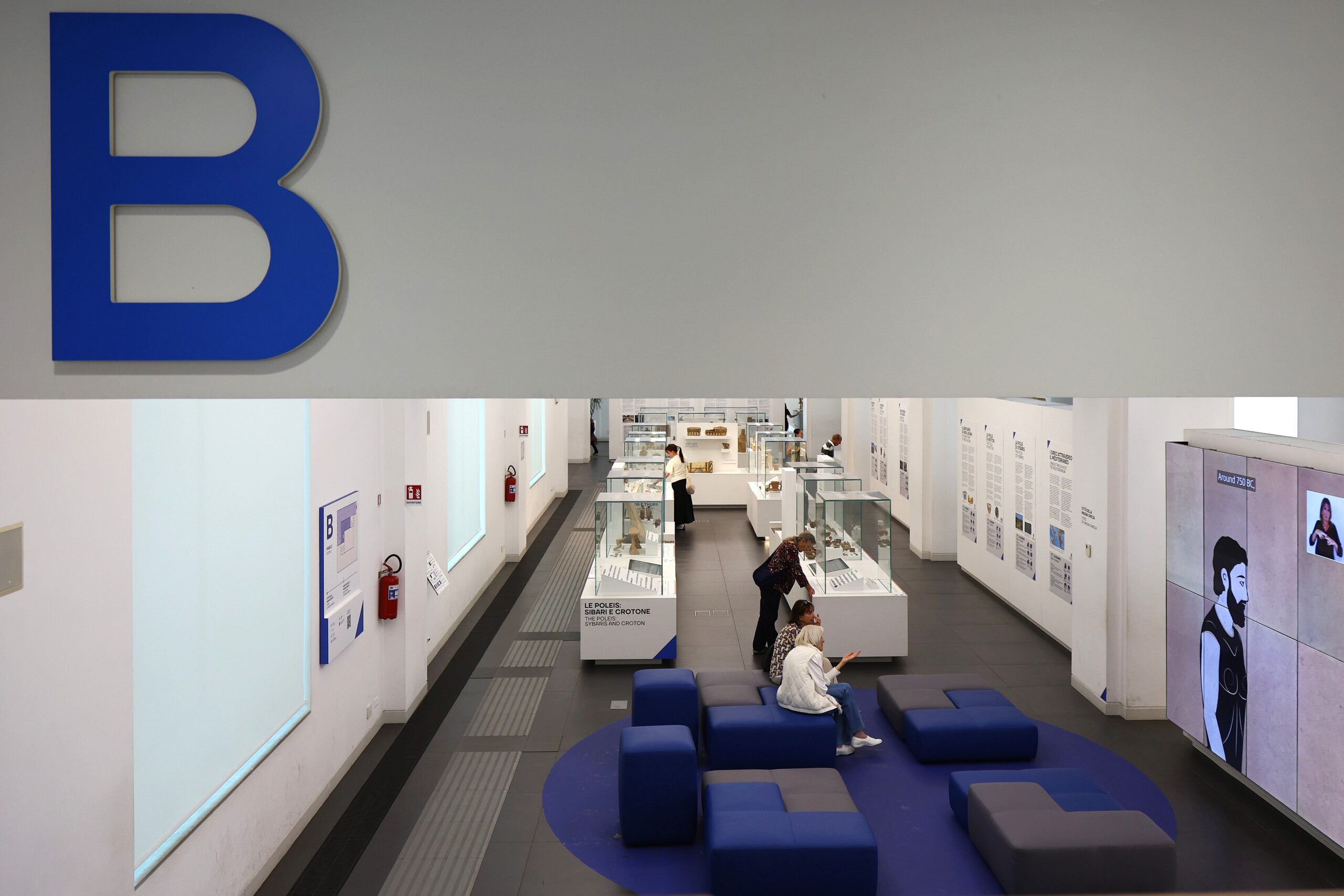
Rest and Seating Areas
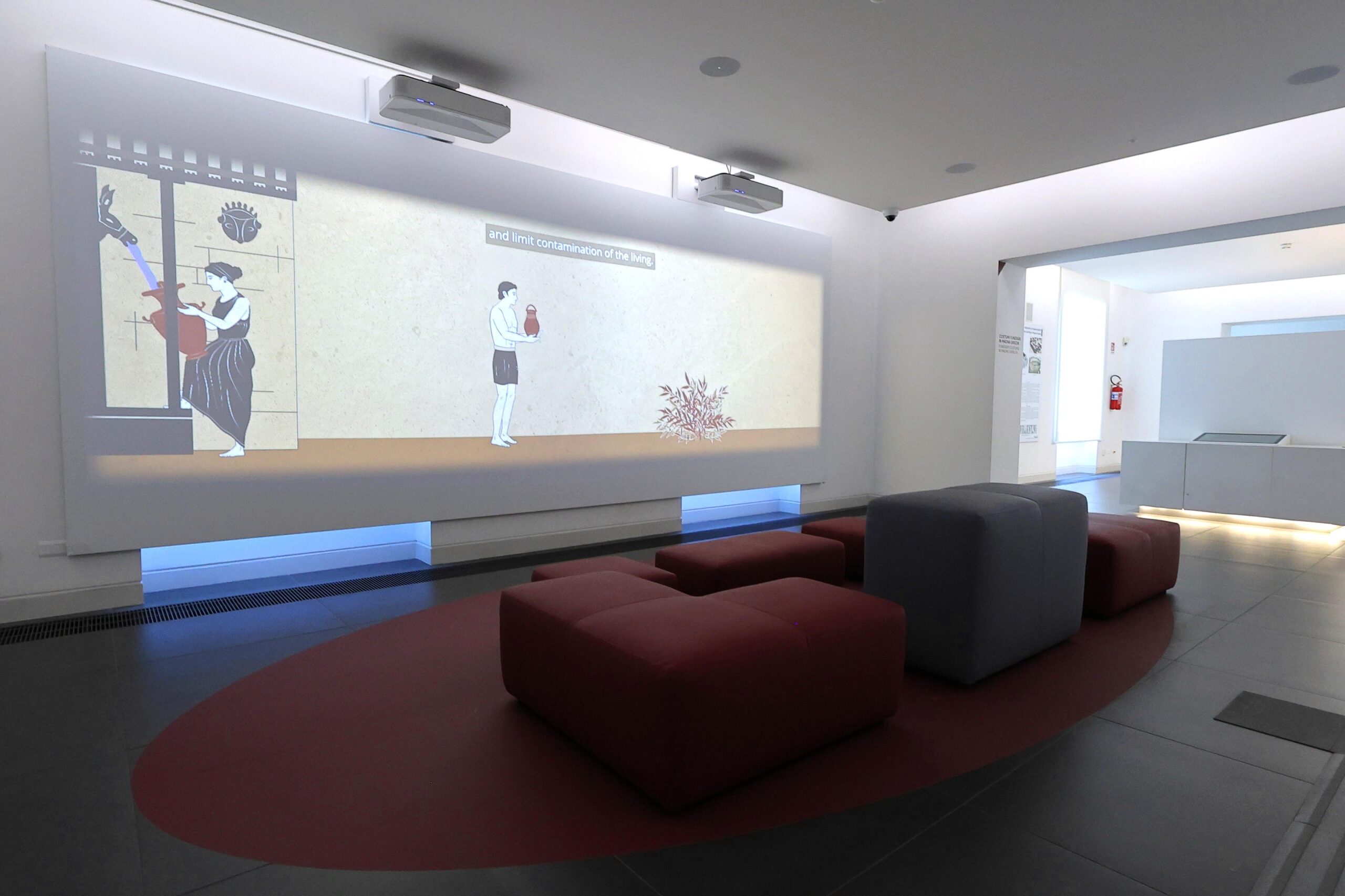
Rest areas have been provided along the museum route, allowing visitors to take a break during their visit and rest whenever needed.
The areas are equipped with modular seating at different heights, offering a variety of seating options. Special floor stickers, colour-coded to match the corresponding exhibition floor, make these areas easier to identify.
Some areas are also equipped with audiovisual content, allowing visitors to combine moments of rest with opportunities to learn more about the archaeological heritage.
Breastfeeding Area
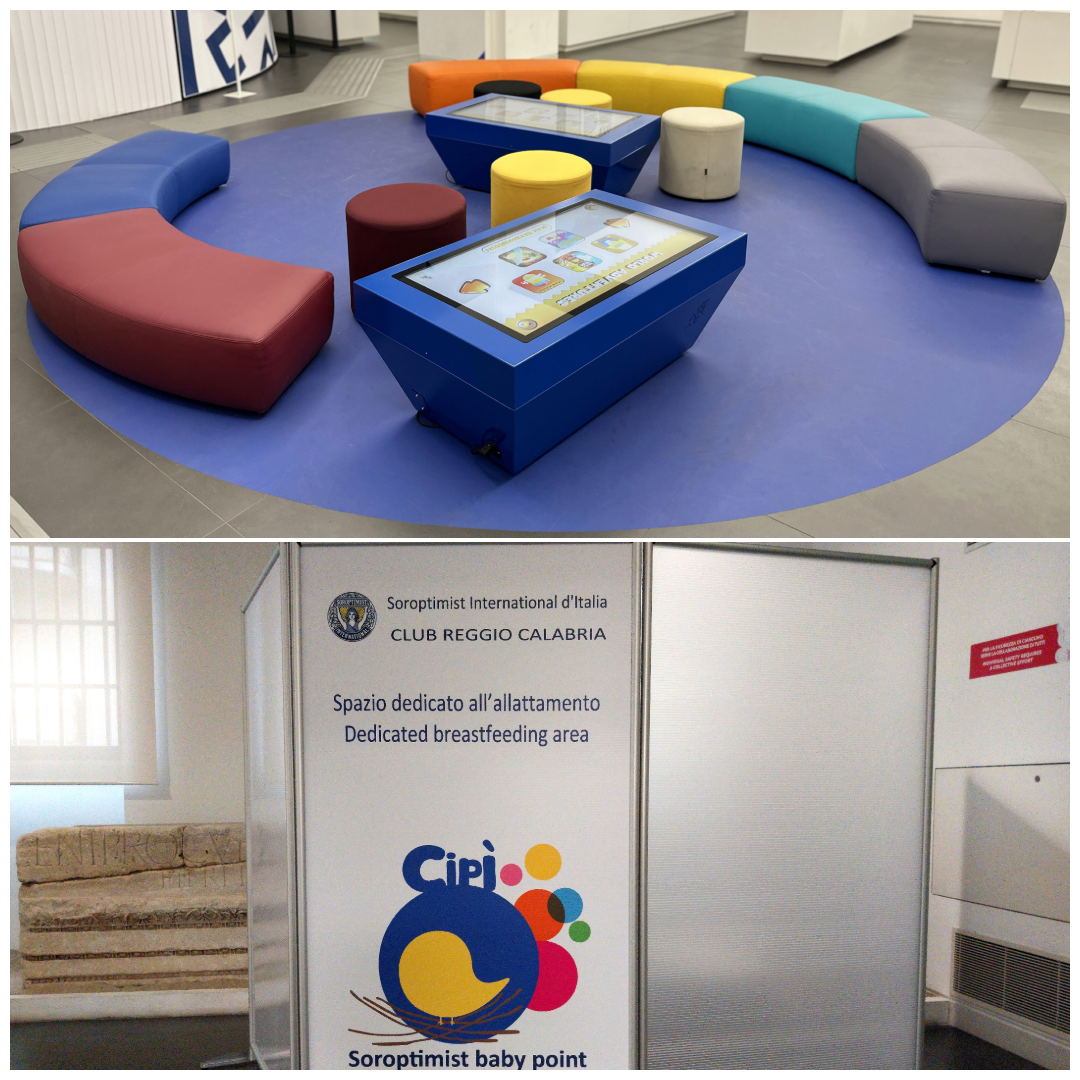
The “Cipì – Soroptimist Baby Point” Breastfeeding Area is a space dedicated to families, designed to provide mothers and babies with comfort, privacy and a welcoming environment within the Museum. Established in collaboration with the Soroptimist International Club of Reggio Calabria as part of the national “Cipì – Soroptimist Baby Point” project, this service helps make cultural spaces increasingly accessible and responsive to the needs of all visitors.
KIDS Area
The Museum features a dedicated children’s area, equipped with seating and multimedia tables.
This space encourages an interactive and engaging visitor experience, introducing younger visitors to the archaeological heritage through tools and learning activities specifically designed for them.
Quiet room
The decompression room is a quiet space where visitors can take a break from the sensory stimuli of the museum experience.
It is designed for those who may experience fatigue, vulnerability or sensory overload during their visit, with particular attention to the needs of neurodivergent people, including some individuals on the autism spectrum or with ADHD, as well as those with sensory sensitivities.
To access the room, visitors are asked to contact a member of the museum’s security staff.
Audiovisual and Multimedia Content
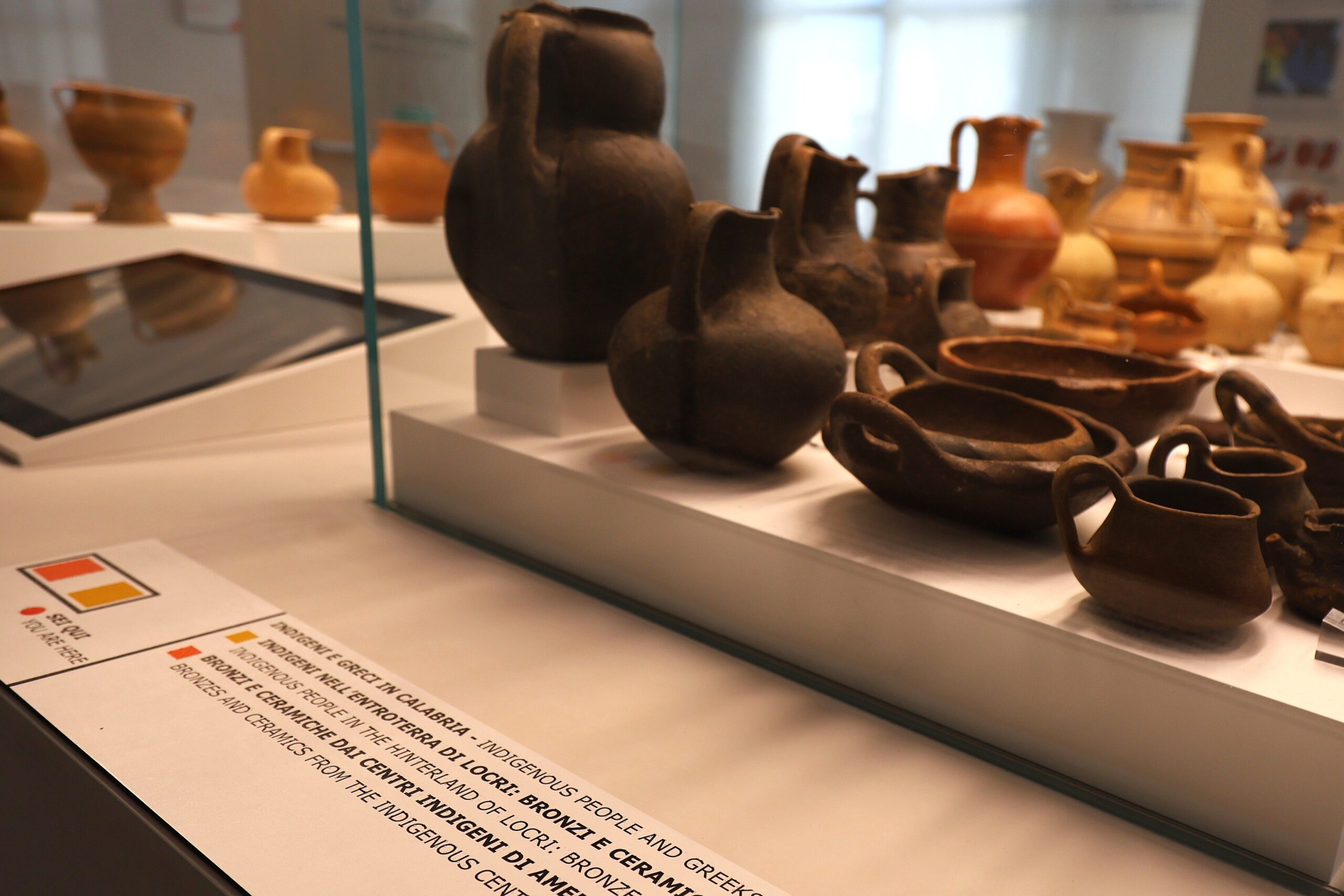
The museum route features new audiovisual content dedicated to the history, archaeology and culture of the local area. The videos explore a range of topics, from prehistory to Greek colonisation, from the funerary rituals of Magna Graecia to the founding of Reghion, as well as specific archaeological sites and artefacts, such as the Temple of Marasà and the Varapodio Cup.
All videos are accompanied by Italian Sign Language (LIS) interpretation and English subtitles, broadening access to the content for visitors with different needs.
Interactive Video on the Varapodio Cup
An interactive multimedia presentation dedicated to the Varapodio Cup allows visitors to explore the artefact in greater depth through a dynamic and engaging experience.
The interaction offers new ways to explore information and interpret the object, complementing the traditional observation of the artefact.
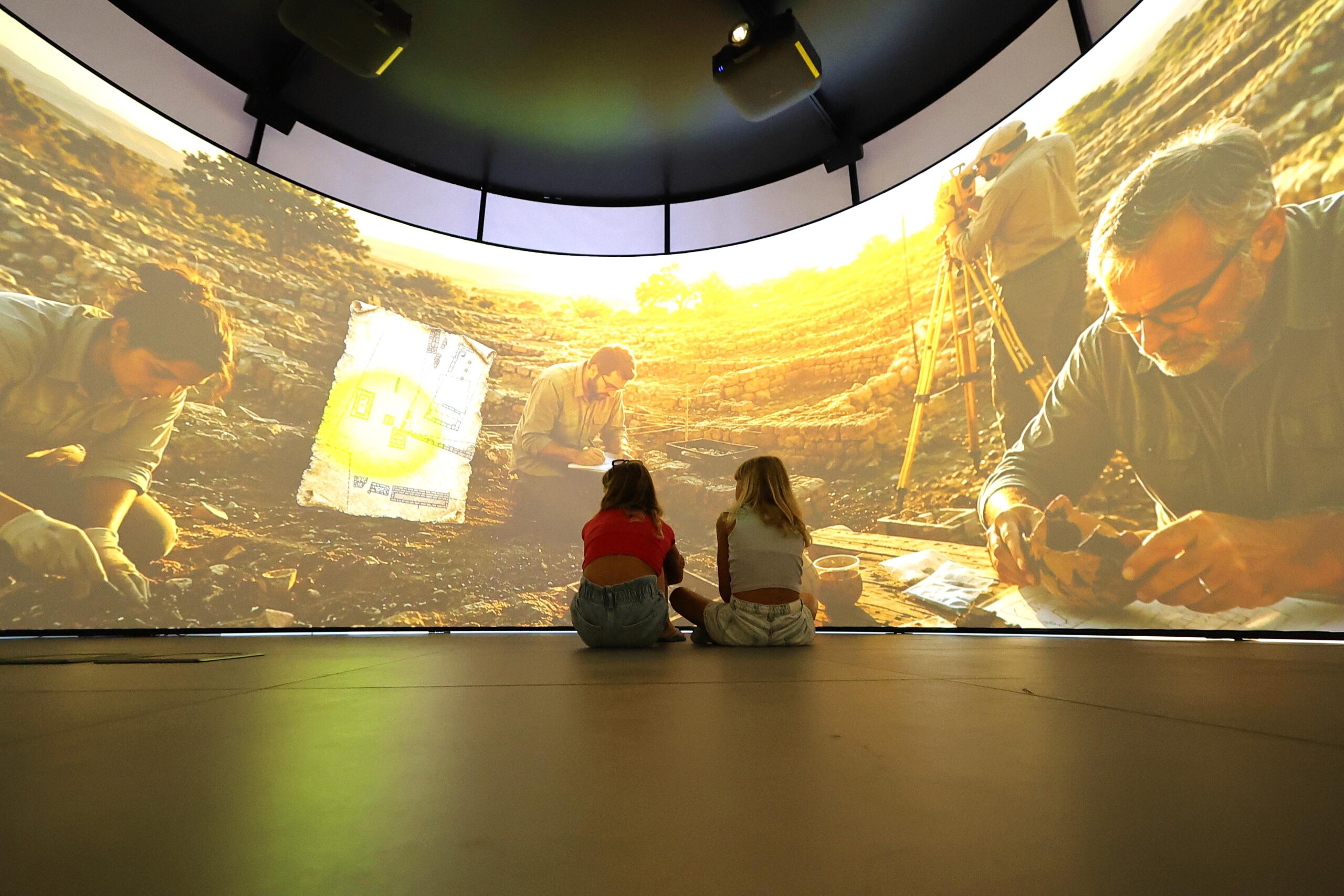
Immersive room
The immersive room features the automatic screening of a video, approximately five minutes long, dedicated to the Temple of Marasà.
Through an engaging audiovisual narrative, the video explores the historical, archaeological and cultural context of the site, complementing the information provided along the exhibition route.