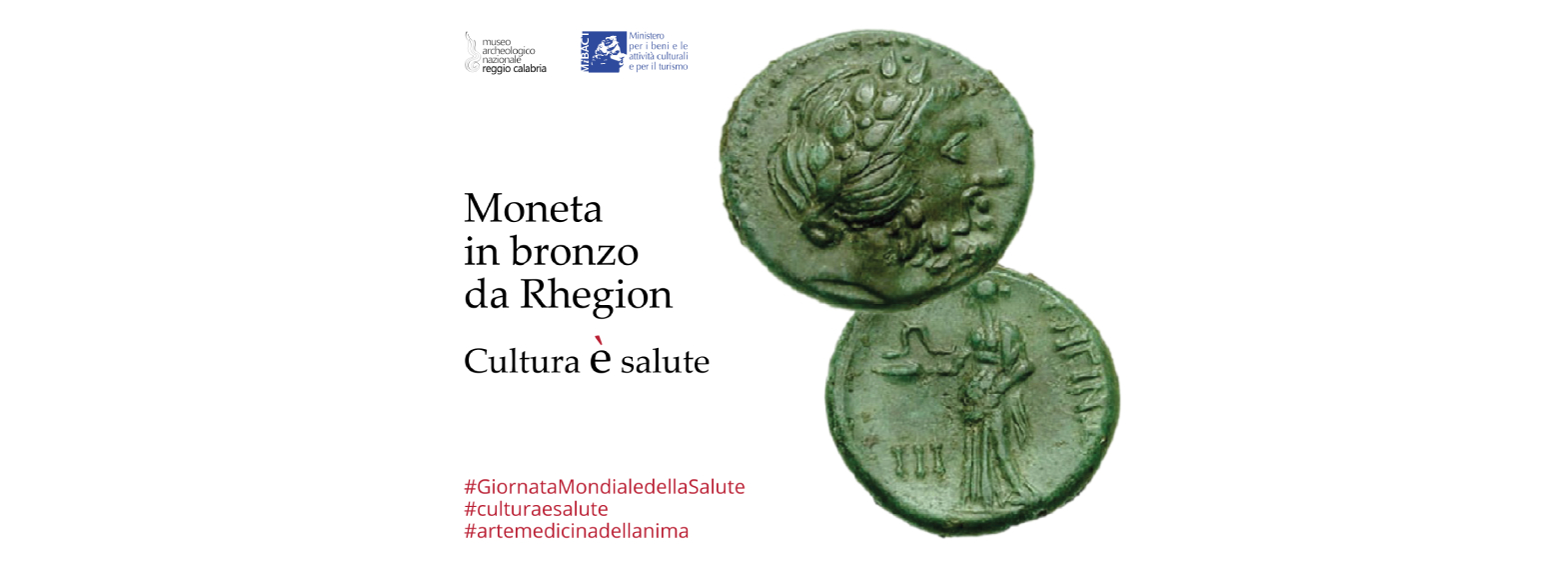
The theme of health and medicine, in the week in which we celebrate the World Health Day (7 April), is the reason that united the four Museums of Magna Graecia (the MArRC, with the MANN-National Archaeological Museum of Naples, the Archaeological Park of Paestum and the MArTA-National Archaeological Museum of Taranto) in a social communication project “in network”, which is a format to be reproposed, to tell the beauty of the common cultural heritage, in a “single look”, from different perspectives, on the ancient world.
The Museums “friends” publish posts on Facebook and other social channels in turn daily, using a consistent graphic for visual communication and the same hashtags (on this occasion: #culturaesalute and #artemedicinadelcuore) and sharing them, in an activity of synergy and mutual promotion.
The project aims to strengthen the “communities of values”, those that in the Faro Convention – recently signed also by Italy – are defined as “communities of heritage”. The history and culture of Magna Graecia, in fact, bring together the populations of southern Italy, leaving a fundamental “imprint” in the style and habits of life of those who live in these places, although in their different paths over the centuries.
The MArRC publishes the post on its own, as part of this “network” initiative, on Thursday 9 April. The protagonist of the visual communication is a bronze coin, minted in Rhegion (ancient Reggio) around the end of the third century BC, depicting on the front side Asclepius (or Aesculapius), god of medicine, and on the reverse side his daughter Hygia, goddess of health. Together, in fact, the divine father and daughter were the “guardians” of the entire state of well-being of the individual. Hygeia was called to prevent diseases, Asclepius to cure them. The myth tells that he was trained in medical art by the centaur Chiron.
As part of the communication shared on the Facebook page, on Friday 10 July, MANN presents the votive pottery of the Magna Grecia collection. These finds come from Cales, near the current Calvi Risorta (Caserta), one of the most important centers of Campania and among the oldest Roman colonies. These offerings are an expression of forms of a popular and spontaneous religiosity, linked above all to the “sanatio”, that is, to the healthy and propitiatory practices of healing and fertility.