Level A
At the Origins of Calabria
Tue – Sun
9 a.m. to 8 p.m.
Last admission 7:30 p.m.
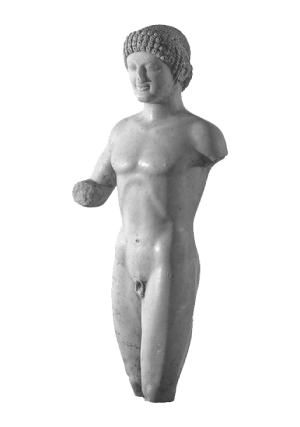
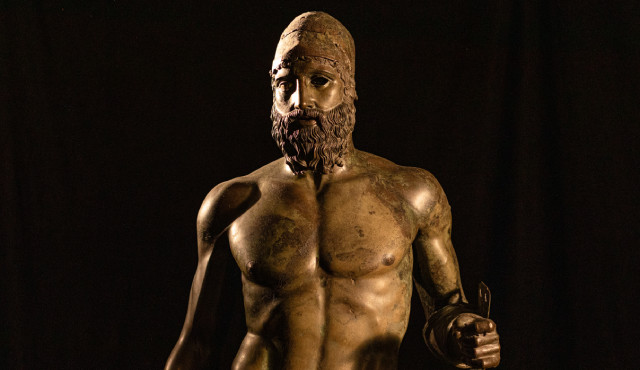
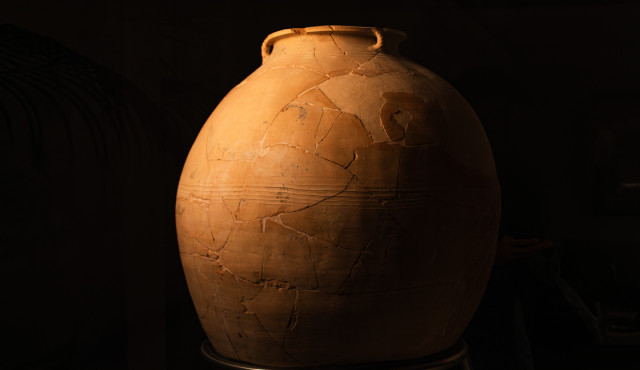
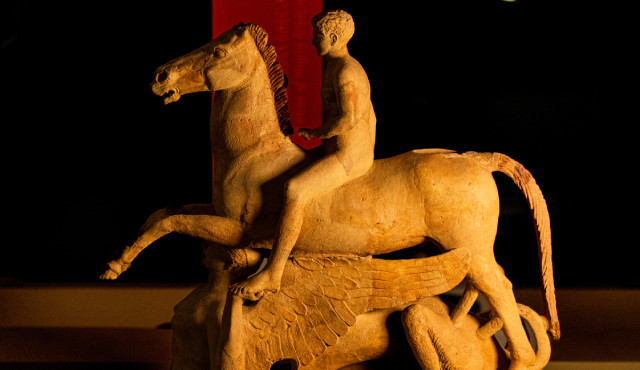
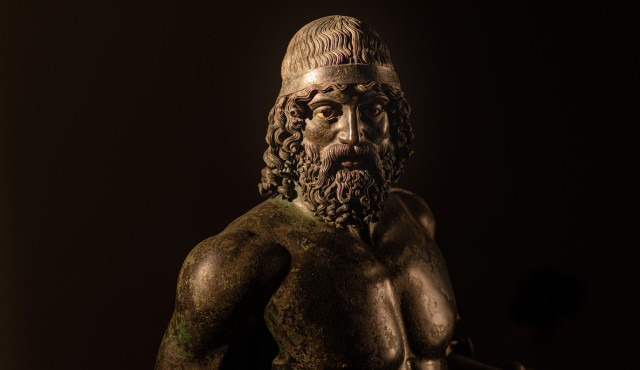
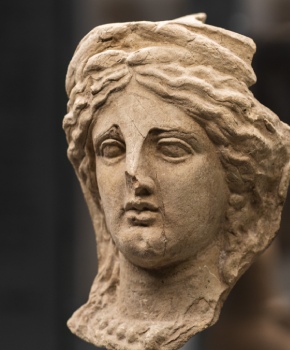
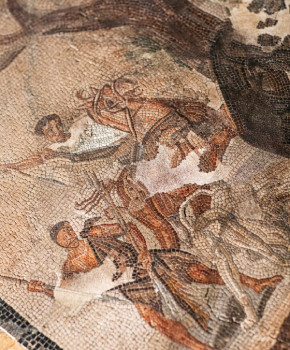
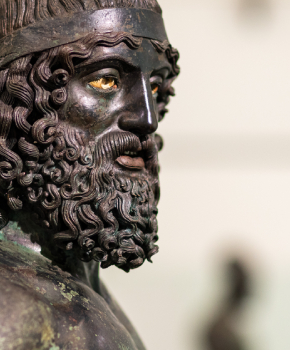
The collections of the National Archaeological Museum of Reggio Calabria tell the long history of ancient Calabria, from prehistory to the Roman era. The permanent exhibition is spread over four levels, featuring more than two hundred showcases filled with artifacts, plus an entire floor dedicated to temporary exhibitions. The path guides visitors through the testimonies of the cultures that inhabited the region: from prehistoric villages to the great Magna Graecian cities, up to the majestic Riace Bronzes.
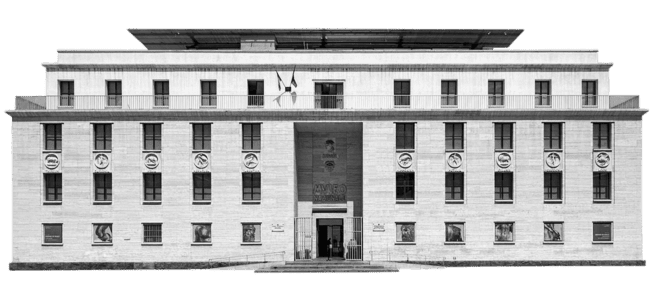
The museum project began after the 1908 earthquake, inspired by the archaeologist Paolo Orsi’s idea to create a large museum dedicated to Magna Grecia. Since 1954, the merging of civic and state collections has shaped an exhibition that gathers the results of decades of excavations throughout the region. The route starts at Level A, dedicated to Prehistory and Protostory, featuring the most significant artifacts from all over Calabria; Level B explores the cities and sacred sites of Magna Grecia; Level C addresses various themes such as theater, music, craftsmanship, necropolises, and daily life. The symbolic heart of the museum is Level D, where the Riace and Porticello Bronzes are displayed in a highly controlled environment. Finally, Level E hosts temporary exhibitions, the lapidary, and an archaeological section visible inside the building, featuring remains of the necropolis discovered in 1932 during the museum’s construction.