Cities and Sanctuaries of Magna Graecia
On the second level, the museum itinerary continues with Section III and Section IV, dedicated to the Greek presence in Calabria. From the cities of Magna Graecia — political and cultural centers founded between the 8th and 6th centuries BCE — to the great sanctuaries that reflect their religious life, the collection offers a vivid and multifaceted portrait of Hellenic civilization.
Coins, inscriptions, ceramics, and votive objects tell the story of myths, deities, rituals, and the social organization of the Greeks of the West.
Book your ticket
TicketGreek Calabria: cities and sacred places
Greek colonies in Calabria
From the 8th century BCE, numerous city-states arose along the coasts of southern Italy, following the Hellenic model of the polis. In Calabria, Sybaris and Croton were among the first colonies, founded at the end of the 8th century BCE.
The coins of Sybaris depict a bull with its head turned backward, a symbol of the city. From the Sanctuary of Timpone della Motta, dedicated to Athena, come numerous miniature vases.
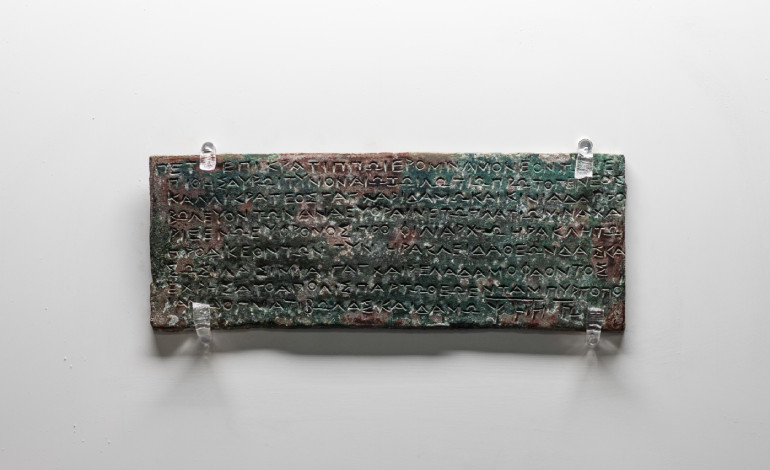
The coinage of Croton was characterized by a variety of types, including the tripod, symbol of the oracle of Apollo at Delphi. From S. Brancato di Tortora comes a stele bearing a Greek inscription from the 6th century BCE — one of the most important documents of archaic Calabrian epigraphy.
Medma and Hipponion
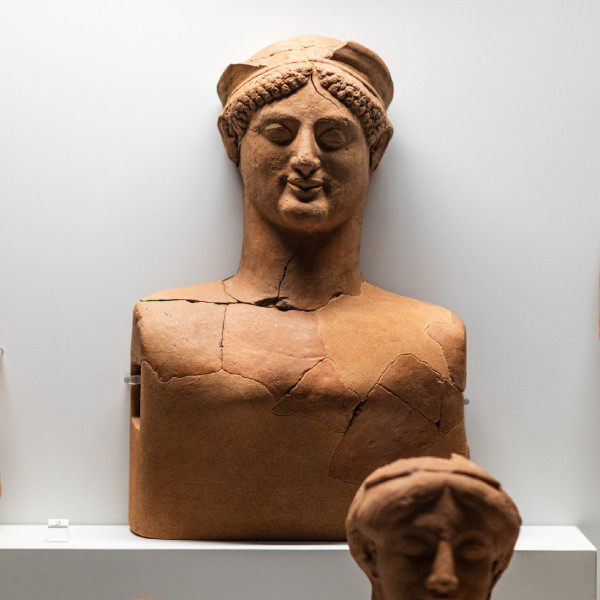
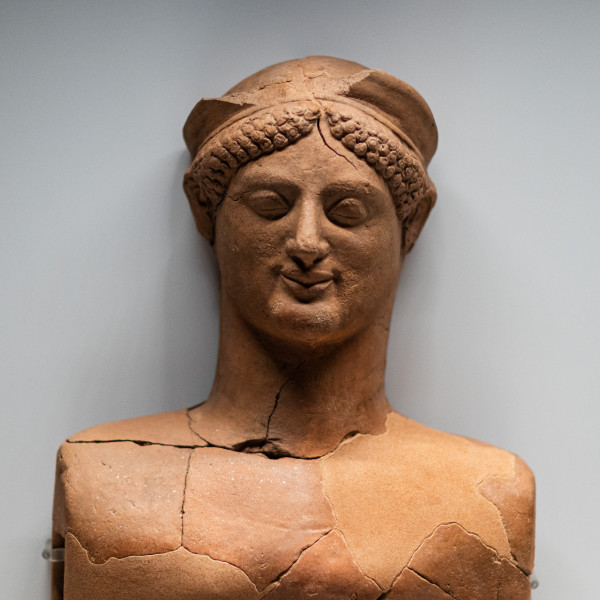
Medma, today’s Rosarno, was founded in the 6th century BCE. From its sacred areas come votive deposits containing numerous ex-votos: female figurines representing Persephone and Aphrodite, and male figures linked to Hermes or Heracles, deities associated with rites of passage.
From Hipponion, now Vibo Valentia, founded at the end of the 7th century BCE, comes a significant votive deposit dedicated to Persephone, rich in terracotta vessels and bronze offerings intentionally fragmented to prevent reuse. Among these is a finely decorated Chalcidian helmet, engraved with two tritons, whose cheek guards were deliberately bent for ritual purposes.
Shrines and sacred cults
The Sanctuary of Mannella in Locri, dedicated to Persephone, has yielded numerous terracotta figurines of the goddess, as well as models of offerings such as flowers, fruit, prepared foods, and sacrificial animals. Bronze offerings, including mirrors and weapons, suggest an aristocratic patronage.
From the Sanctuary of Marasà comes one of the columns of the peristyle and the statue group of the Dioscuri.
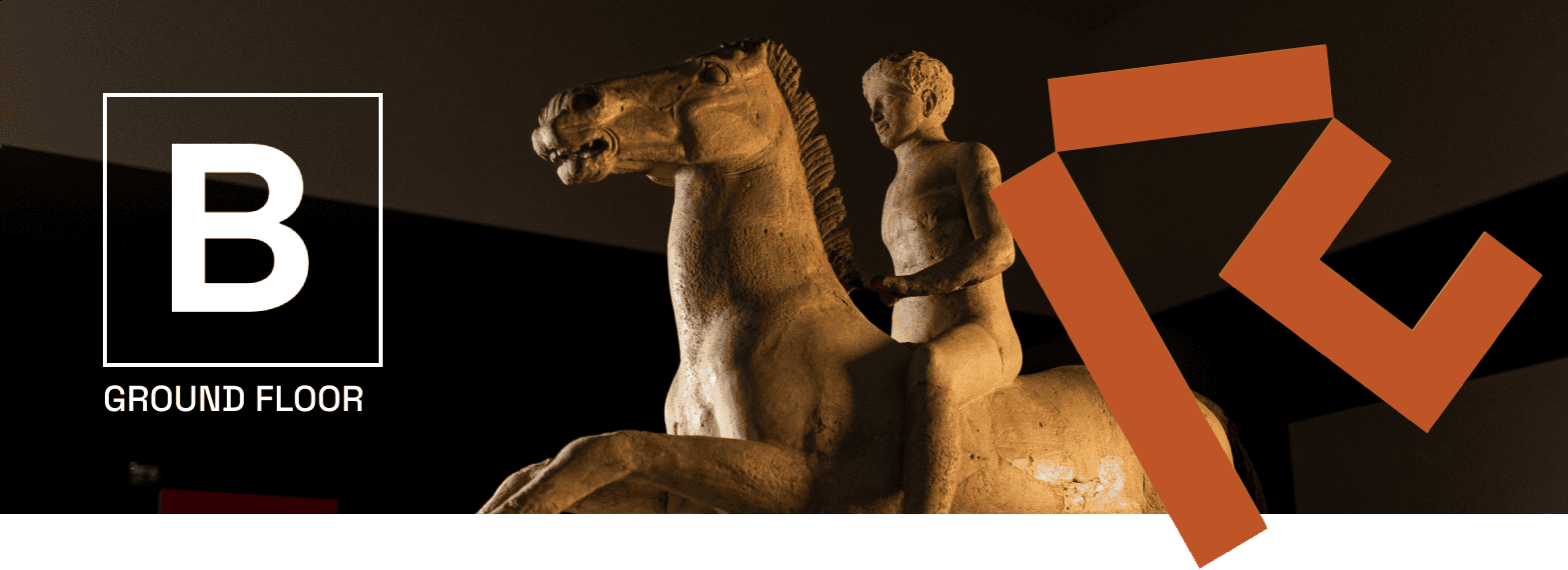
Near the theater stood a Doric temple, which housed the terracotta sculptural group known as the Cavalier of Casa Marafioti.
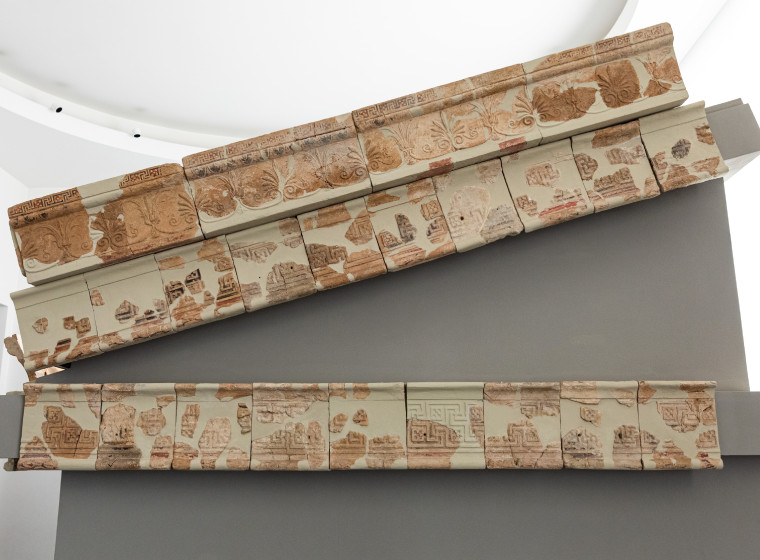
At Caulonia, magnificent architectural fragments, including a painted ridge tile and terracotta revetments, have made it possible to reconstruct the roof of the Passoliera temple.
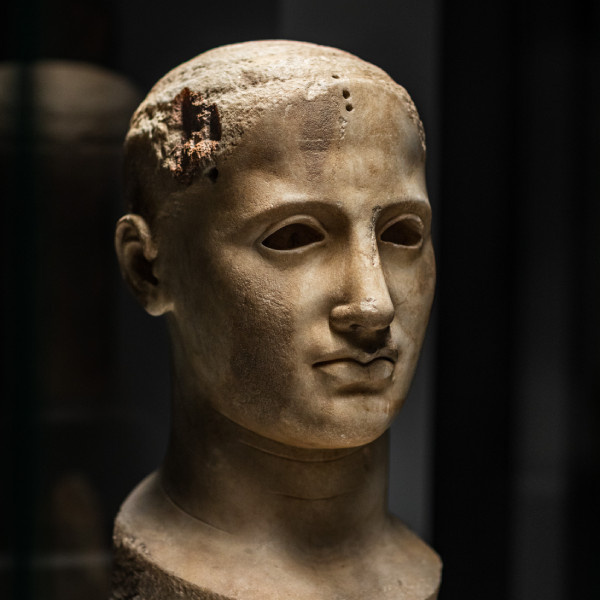
At Krimisa, modern-day Cirò, excavations uncovered a sanctuary dedicated to Apollo Aleus, featuring an acrolithic sculpture and numerous votive objects, including a precious gold figurine of the god.